Welcome to visit Xinxiang Zhongxin Hydraulic Technology Co., Ltd. !
- Phone:0086-158 3617 7527
- Email:[email protected]
Welcome to visit Xinxiang Zhongxin Hydraulic Technology Co., Ltd. !
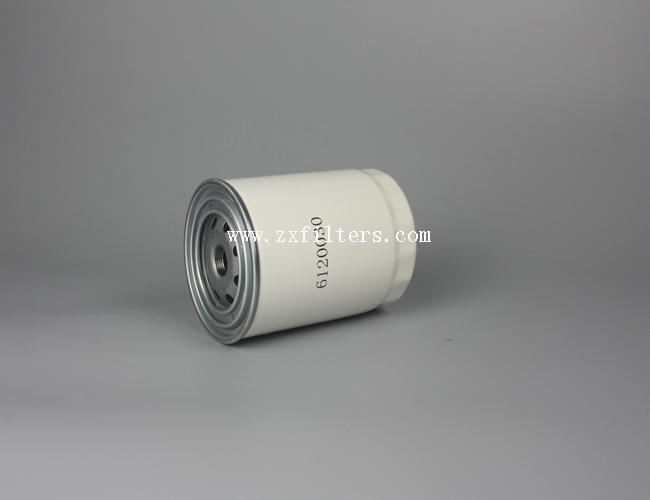
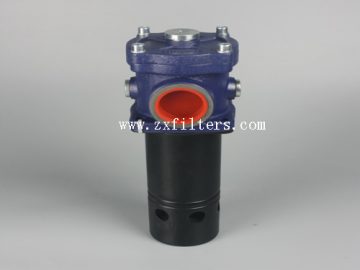
1. Installed at the pump's suction port: A surface-type oil filter is typically installed in the hydraulic pump's suction line, primarily to intercept large-sized contaminant particles and thereby protect the hydraulic pump from damage. Additionally, the filter's capacity must ensure a flow rate of at least twice the pump's rated flow, while the pressure drop should be kept within 0.02 MPa.
2. Installed on the oil line at the pump outlet: This oil filter is designed to remove contaminants that may enter critical components such as valves. Its filtration accuracy should be set within the range of 10 to 15 μm, and it must be able to withstand the working pressure and shock pressure in the oil line, ensuring that the pressure drop remains below 0.35 MPa. Additionally, a safety valve should be installed to address possible blockages of the oil filter.
Another installation position for the oil filter is on the return line of the hydraulic system. This installation method serves as an indirect filtering function. Usually, the oil filter on the return line is installed in parallel with the bypass valve to ensure that when the filter becomes clogged and reaches a certain pressure, the bypass valve can automatically open, maintaining the normal operation of the system. Additionally, the oil filter can also be installed on the branch oil lines of the system, or a separate filtration system can be set up. For large hydraulic systems, a dedicated hydraulic pump and oil filter can be specially designed to form an independent filtration circuit to ensure the stability and reliability of the system.
In the hydraulic system, in addition to the oil filter required for the entire system, a dedicated fine oil filter is often installed separately in front of some key components to ensure the normal operation of these components. When the hydraulic system has been in use for a period of time, due to various reasons, additional phenomena or manufacturing obstacles may occur. At this time, appropriate repair measures need to be taken, such as disassembly, replacement of components, etc., and it is necessary to ensure that during the disassembly and reinstallation process, O-rings or other sealing parts remain intact, and the sliding process is smooth without any obstruction. At the same time, when installing hydraulic components or pipe joints, excessive tightening force should be avoided to prevent the hydraulic component housing from deforming or the oil from overflowing at the sliding valve or joint part.